
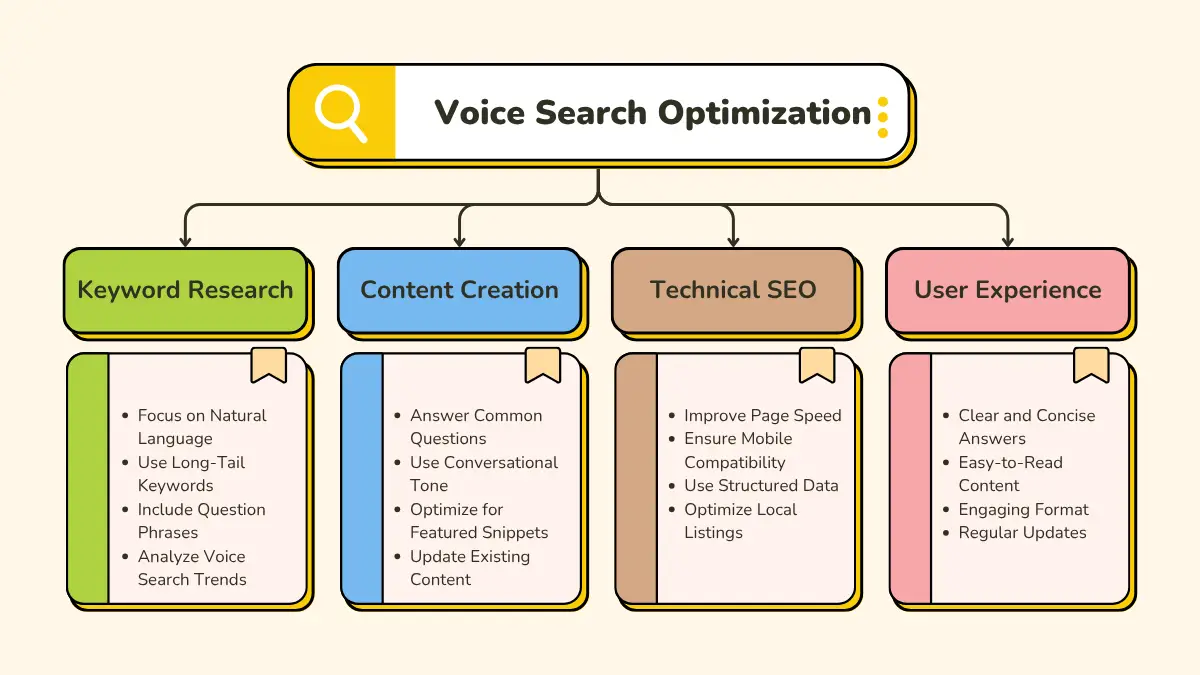
Last Updated on July 14, 2026 by Vinod Saini
- Why 2026 Is Different
- The Hinglish Factor: India’s Hidden Voice Layer
- Semantic SEO: Entities Over Keywords
- Conversational Long-Tail Keywords
- Winning Position Zero (Featured Snippets)
- Local SEO for “Near Me” Voice Queries
- Technical Foundations
- Frequently Asked Questions
- Related SEO Guides
Quick Answer: Most SEO agencies are still chasing keyword lists they built in 2022. But in 2026, if your content doesn’t reflect the way a user in Rohini or Lajpat Nagar actually speaks to their phone — mixing Hindi and English mid-sentence — you are invisible to one of the fastest-growing voice search audiences in the world. India’s voice commerce market is projected to grow from $1.57 billion in 2024 to $7.47 billion by 2030 (32% CAGR). Optimizing for voice and optimizing for AI Overviews are the same task — nail one, and you capture both.
Key Takeaways
- Voice commerce = $7.47B by 2030 in India — 32% CAGR; businesses not voice-optimized are writing themselves out of the decade’s biggest growth curve
- AI Overviews and voice search share the same NLP engine — optimizing for one automatically optimizes for the other
- Hinglish queries are invisible to standard keyword tools — but they’re real, high-intent, and uncontested by most competitors
- Position Zero = the only answer in voice results; there is no “second result” read aloud
- FAQPage schema + direct answer formatting is the core technical requirement for voice + AI Overview eligibility
- 58% of local voice searches have commercial intent — these are ready-to-call, ready-to-visit users
Why 2026 Is Different
Voice search has moved well beyond “Alexa, set a timer.” Users now have multi-turn conversations with Gemini Live and ChatGPT Voice, asking follow-up questions and expecting immediate, precise answers — not ten blue links.
The engine behind this is the same technology powering Google’s AI Overviews: Natural Language Processing (NLP) that understands intent, not just characters. Optimizing for voice and optimizing for AI Overviews are the same task.
India’s voice commerce market: $1.57 billion in 2024 → $7.47 billion by 2030 (32% CAGR). If you serve Indian audiences and aren’t voice-optimized, you’re missing the decade’s biggest search growth curve.
The Hinglish Factor: India’s Hidden Voice Layer
This is what no generic SEO blog will tell you, because no AI has audited a Delhi-based client’s Search Console data.
In Hindi-speaking regions, users blend English nouns with Hindi verbs mid-sentence. Real voice queries from Delhi NCR clients’ Search Console:
- “Mere paas sabse acha SEO agency kaunsa hai?”
- “10 hazaar ke andar website banana hai”
- “Best college in Delhi for BCA — admission kaise hoga?”
None of these appear in standard keyword tools. But they represent genuine, high-intent searches.
How to capture Hinglish voice searches:
- Include Hinglish anchor phrases in FAQ sections — write the English question, then add an alternate Hinglish phrasing as an H3
- Optimize your Google Business Profile Q&A with Hinglish variants of your top service queries
- Mine your own Search Console data — filter queries containing “kaise,” “kahan,” “kya,” “mere paas,” and “near me” for any Delhi NCR property. These patterns are proprietary voice intelligence no competitor can replicate
Semantic SEO: Entities Over Keywords
Search engines no longer match strings of characters. They map entities — distinct concepts and their relationships.
- Build topic depth, not keyword density. If writing about “digital marketing for colleges,” cover related entities: admission seasons, entrance exam cycles, fee structures, placement rates. Each entity strengthens Google’s topical confidence
- Define relationships explicitly. “Programmatic advertising works best during the July–September college admission window in India” — not just a bullet list
- Anticipate the follow-up. If a user asks “Which is the best MBA college in Delhi?”, the next question is almost certainly “What is the fee structure?” or “Is it NAAC accredited?” Cover these connected topics in the same article
Conversational Long-Tail Keywords
Voice queries contain 29% more words than typed searches. People speak faster than they type, and voice assistants reward content that mirrors natural speech.
- Use the 5 Ws and H in headings. An H2 reading “How Much Does Technical SEO Cost in Delhi?” outperforms a generic “SEO Pricing” header in voice results every time
- Read your content aloud before publishing. If it sounds like a brochure, rewrite it. If you stumble on a sentence, your users will too — and so will the NLP algorithm
- Mine “People Also Ask” aggressively. Each PAA box is a direct window into the conversational queries your audience already uses. Create H2/H3 sections that mirror these questions verbatim and answer them in the first 40–60 words
Winning Position Zero (Featured Snippets)
Voice assistants — Siri, Google Assistant, Alexa — read the Featured Snippet as the only answer. There is no “second result” in a voice response.
- Inverted Pyramid rule: Put the answer first. Place your core solution in the opening sentence of every section. Elaborate afterward. This tells NLP exactly where the answer is
- Use structured lists and tables. Numbered lists are especially powerful for instructional content. A clean 6-step numbered list gives Google a directly extractable, speakable answer
- Keep sentences tight. Subject-Verb-Object. Complex clause structures confuse NLP models. Write like you’re explaining to a smart 16-year-old, not submitting a research paper
Local SEO for “Near Me” Voice Queries
58% of consumers use voice search to find local business information. These users are in-motion, on mobile, and have high commercial intent — ready to call, visit, or book.
- Hyper-optimize your GBP. Keep NAP consistent across every platform. Proactively populate the Q&A section with your target conversational queries and answer them yourself before anyone else does
- Go hyperlocal in your copy. “Best SEO agency in Delhi” is weak. “SEO services near Connaught Place” or “digital marketing agency for colleges in South Delhi” is what voice assistants pull when location is resolved
- Own your operating hours everywhere. Voice search users want right-now answers. Accurate hours on Google, Justdial, and IndiaMART — including holiday hours — determine whether you appear when someone says “SEO consultant open now near me”
Technical Foundations
Schema Markup
❌ Do NOT use Speakable schema — it’s not validated by schema.org and will cause errors in the schema validator. Use FAQPage + LocalBusiness instead.
FAQPage Schema: Mark up every FAQ section on your site. This dramatically increases the probability of your answers appearing in both AI Overviews and voice responses.
LocalBusiness Schema: For any Delhi NCR service page, implement LocalBusiness schema with areaServed set to specific neighbourhoods, not just the city. This feeds Google’s local knowledge graph directly.
Video SEO for Voice
Voice assistants in 2026 increasingly pull answers from YouTube video transcripts, especially YouTube Shorts:
- Auto-generated captions must be corrected and accurate
- Video title should mirror a natural voice query: “How do I fix crawl errors in WordPress?”
- Video description should contain a clean text summary of the answer — this is what gets indexed
Mobile Speed & Core Web Vitals
Voice searches happen overwhelmingly on mobile. Target these 2026 benchmarks:
- LCP (Largest Contentful Paint): Under 2.5 seconds
- INP (Interaction to Next Paint): Under 200ms
- CLS (Cumulative Layout Shift): Under 0.1
Compress images to WebP, eliminate render-blocking scripts, and use a CDN for Delhi NCR audiences with variable mobile connectivity.
Frequently Asked Questions
How does voice search optimization differ from traditional SEO?
Voice SEO targets complete conversational sentences and question-based queries — not fragmented short-tail keywords. Voice strategy prioritizes direct answers in the first 40–60 words to capture Position Zero, since voice assistants read only the top result.
Do AI Overviews and voice search work together?
Yes — they share the same NLP foundation. Content optimized for voice (clear structure, direct answers, entity relationships) is automatically optimized for AI Overviews.
How do I find voice keywords for Indian audiences?
Filter Google Search Console queries containing “kaise,” “kahan,” “kya,” “mere paas,” and “near me.” Supplement with AnswerThePublic and People Also Ask boxes.
Can blog posts rank for local “near me” voice searches?
Yes. Posts like “Top 5 SEO Agencies Near Connaught Place” build local topical authority that voice assistants reference. Pair with LocalBusiness schema and strong internal links.
Does site speed affect voice search rankings?
Directly. Core Web Vitals are a tiebreaker when Google selects the definitive voice answer. LCP above 4 seconds = passed over regardless of content quality.
Related SEO Guides
- How to Rank in Google AI Overviews
- Ultimate Guide to Voice Search Optimization
- Schema Markup Implementation Tutorial
- Local SEO for Small Businesses on a Budget
- Technical SEO Services in Delhi
Ready to capture India’s voice search growth before competitors? Get a free 25-point SEO audit at CompareSEO.net — 72-hour delivery, no obligation.
Call / WhatsApp: +91-8700165550 | Email: info@compareseo.net

Vinod Saini is an SEO Consultant, Technical SEO Specialist and SEO Content Writer with 15+ years of experience in search engine optimization and digital marketing. He specializes in Technical SEO, On-Page SEO, AI Search Optimization (AEO & GEO), Schema Markup, Core Web Vitals, Local SEO, and WordPress SEO. Through CompareSEO, he shares practical SEO strategies, industry insights, and actionable guides to help businesses improve their organic visibility and stay ahead of evolving search trends.