On-Page SEO vs Off-Page SEO Key Differences and How to Optimize
 By Vinod Saini
Last Updated on March 15, 2026 by Vinod Saini
Here’s a question most business owners and marketers get wrong: “Should I focus on on-page SEO or off-page SEO?”
The honest answer? Both — but in the right order, with the right priorities for 2026.
Search has fundamentally shifted this year. 58% of Google searches now end without a single click, with AI Overviews answering queries directly on the results page. Ranking on page one no longer guarantees traffic. Being cited as a trusted source does.
That changes how you think about both on-page and off-page SEO — because together, they determine not just where you rank, but whether you get referenced by Google’s AI, ChatGPT, and Gemini at all.
The query “on-page SEO vs off-page SEO” attracts over 12,000 monthly searches worldwide, and for good reason. This guide gives you a clear breakdown, updated 2026 statistics, actionable checklists, and proven strategies to optimize both — for traditional rankings and AI-powered search.
What Is On-Page SEO? Core Elements and 2026 Priorities
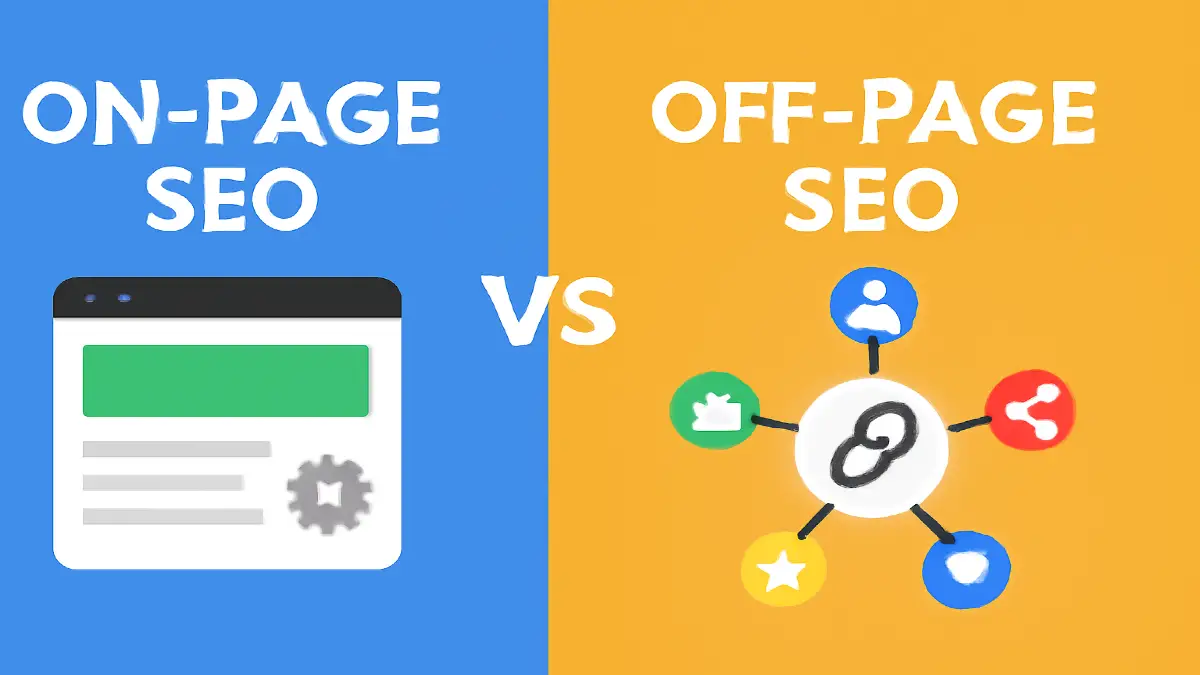
On-page SEO means optimizing everything directly on your website — content, structure, code, and user experience — so search engines understand your pages and rank them for the right queries.
Google’s 2026 quality guidelines double down on E-E-A-T (Experience, Expertise, Authoritativeness, Trustworthiness). Pages that demonstrate genuine expertise and helpful, original content consistently outperform thin, keyword-stuffed pages.
The keyword “what is on-page SEO” attracts 8,400+ monthly searches at medium difficulty — and the businesses ranking for it share one trait: content that fully satisfies the searcher’s intent. Focus on these pillars:
-
Content relevance: Write 1,500–2,500+ word pieces covering your primary keyword at a natural 1–2% density, supported by LSI terms like Core Web Vitals, schema markup, and topical authority
-
Technical foundations: Mobile-first compliance is non-negotiable — 81% of AI Overview searches happen on mobile
-
User experience signals: Pages loading under 2.5 seconds convert significantly better; target bounce rates below 40% with clean, engaging layouts
-
AI-ready structure: Short paragraphs, bullet lists, direct answers, and FAQ sections increase your chances of being cited in AI Overviews
E-E-A-T: What It Actually Looks Like
E-E-A-T isn’t a checkbox — it’s a signal built through every element on your page.
Add author bios with real credentials, link to original research, display verifiable case studies, and keep your content updated regularly. Google’s systems now assess consistency of expertise over time, not just one-off quality signals. For SMBs and professional services especially, this is what separates page-one results from page-two obscurity.
What Is Off-Page SEO? Building External Trust Signals
Off-page SEO builds your website’s authority through activities that happen outside your domain — backlinks, brand mentions, social signals, and digital PR.
Backlinks remain a top-3 ranking factor in 2026. But the data reveals a sobering reality: 95% of all pages online have zero backlinks, and pages ranking #1 carry 3.8x more backlinks than pages ranking in positions 2–10. Quality, not volume, is what moves the needle — one DA 70+ backlink outperforms 20 low-quality ones.
Key components of off-page SEO:
-
Inbound links: Earn backlinks from relevant, high-authority domains in your niche — relevance now matters as much as domain rating
-
Brand mentions: Unlinked citations on reputable sites build entity recognition, which AI systems use to assess trustworthiness
-
Social proof: Consistent sharing on LinkedIn and industry platforms drives 22% referral traffic and amplifies content reach
-
AI citations: Being referenced by ChatGPT, Gemini, and Perplexity is the new form of off-page authority — AI search traffic grew 527% year-over-year
Google’s algorithms — including its 2026 Helpful Content and Entity Recognition systems — evaluate these holistic signals together to determine long-term rankings.
On-Page SEO Checklist: Step-by-Step 2026 Optimization
Execute this checklist to achieve 20–30% CTR improvements through rich snippets, featured positions, and AI Overview citations:
-
Title tags and meta descriptions: Keep titles to 55–60 characters — e.g., “On-Page SEO Checklist: 2026 Tactics for Top Ranks” — and meta descriptions to 150–160 characters with a strong CTA. URLs with target keywords earn a 45% higher CTR
-
Heading structure: Use a single H1 for your main topic, H2s for subtopics like “on-page and off-page SEO differences,” and H3s for LSI terms like topical authority and SERP features
-
Keyword integration: Place your primary keyword in the H1 and first 100 words; weave in semantic terms like dwell time, Core Web Vitals, and AI Overview optimization naturally
-
Content depth: Use short paragraphs (2–3 lines), bullet lists, and tables; target a Flesch Readability score above 70
-
Internal linking: Add 7–10 descriptive anchor text links to related pages — this boosts crawl equity and topical authority signals
-
Multimedia optimization: Compress images below 100KB with keyword-rich alt text; videos increase time-on-page by up to 88%
-
Schema markup: Implement Article, FAQPage, and HowTo JSON-LD — schema-optimized pages earn 30% more rich result visibility
-
Page speed: Pass Core Web Vitals benchmarks (LCP under 2.5s, stable CLS) — compliance lifts rankings for 70% of audited sites
-
AI-readiness: Structure content with direct Q&A formats and summary boxes for AI Overview extraction
Audit weekly via Google PageSpeed Insights and Google Search Console.
Off-Page SEO Checklist: High-Impact Tactics for Authority Growth
Use this checklist to scale your referring domain count and build the kind of authority AI systems trust and cite:
-
Guest posting: Target DA 50+ sites in your niche; one quality post typically earns 2–5 backlinks and builds brand visibility in your industry
-
Broken link building: Find dead links on niche blogs using Ahrefs — Ahrefs maintains the industry’s largest backlink index at 500 million referring domains — and offer your content as a replacement
-
Social media amplification: Post consistently on LinkedIn and X (Twitter); regular sharing drives 22% referral traffic and extends organic reach
-
Digital PR and HARO: Answer journalist queries via HARO for media backlinks; proactive users see a 40% success rate and earn high-authority editorial mentions
-
Directory and citation management: Claim and maintain consistent NAP profiles on Google Business Profile, IndiaMART, Justdial, and industry directories
-
Influencer and expert collaborations: Partner with recognized voices for authentic brand mentions — these convert 3x better than paid placements
-
Podcast and forum engagement: Contribute to industry podcasts and communities like Reddit’s r/SEO for natural, high-trust brand mentions
-
LLM citation building: Publish original data and proprietary research that AI tools can reference — being cited in AI Overviews now doubles your CTR from 0.6% to 1.08%
Track your authority growth using Ahrefs (Domain Rating) or Semrush (Authority Score) monthly.
On-Page vs Off-Page SEO: Data-Driven Comparison
On-page SEO delivers quick relevance wins. Off-page SEO sustains long-term authority and AI visibility. Neither works at full potential without the other.
Technical SEO: The Foundation Connecting Both
Technical SEO sits at the intersection of on-page and off-page — it’s the infrastructure that makes both work.
HTTPS is both a trust signal (off-page) and a crawling requirement (on-page). XML sitemaps improve indexing efficiency. Canonical tags prevent duplicate content penalties that erode your authority.
Key technical priorities:
-
Fix canonical tags to eliminate duplicate content across paginated pages and URL variants
-
Optimize robots.txt and crawl budget — especially critical for large e-commerce and D2C sites with thousands of SKUs
-
Add hreflang tags for multilingual sites targeting regional Indian markets or international audiences
-
Ensure clean, keyword-relevant URL structures — they earn a 45% higher CTR than non-descriptive URLs
68% of all search experiences still begin on Google — flawless technical health is what gets you into that game.
Three Trends Reshaping Both On-Page and Off-Page SEO
1. Answer Engine Optimization (AEO): The New On-Page Priority
AEO is the practice of structuring your content specifically to be cited in AI-generated answers — Google AI Overviews, ChatGPT, Gemini, and Perplexity.
88% of keywords that trigger AI Overviews have informational intent — exactly the type of content most business blogs already produce. The gap is structure. AEO means writing direct, factual answers, using FAQPage schema, and organizing content with clear Q&A formatting so AI systems can extract and cite it confidently.
For SMBs and professional services, AEO is now as important as traditional on-page optimization.
2. Zero-Click SEO: Winning Without the Click
58% of searches end without any click. This isn’t a threat — it’s a strategy shift.
Optimize for featured snippets, “People Also Ask” boxes (which appear in 81% of AI Overview results ), and knowledge panels. The goal moves from “get the click” to “own the answer.” Even without a click, consistent AI Overview appearances build brand recall, drive direct traffic, and position your business as the go-to authority in your niche.
3. LLM Visibility: The New Off-Page Frontier
AI search traffic grew 527% year-over-year and is projected to surpass traditional search traffic by 2028.
Getting cited in ChatGPT, Gemini, and Perplexity is the new form of off-page authority. These tools pull from brand mentions, third-party reviews, structured content, and backlink profiles to decide which businesses to recommend. Publish original research, earn editorial mentions, and maintain consistent brand presence across authoritative platforms — this is what builds LLM visibility in 2026.
Real-World Case Studies: On-Page and Off-Page Synergy in Action
Backlinko ranks in the top 3 for “on-page SEO” with 3,000+ word guides, robust schema markup, and 500+ quality backlinks — their traffic grew 40% year-over-year by combining both strategies simultaneously.
A D2C e-commerce brand doubled organic visits within 8 months by pairing on-page content clusters (targeting buyer-intent keywords) with guest posts on Search Engine Journal and Moz. The combined effect: 130% increase in organic traffic and a 25% drop in customer acquisition cost.
The pattern is consistent across industries — real growth comes from on-page + off-page working together, not one in isolation. Start with a technical and on-page audit, build content authority, then amplify through link building and digital PR.
Proven Best Practices: Integrating Both for 2026 Dominance
-
Audit monthly using Semrush or Ahrefs — Ahrefs leads for backlink depth, Semrush wins for integrated site auditing
-
Build content calendars around high-intent topic clusters that answer real buyer questions at every funnel stage
-
Monitor competitor gaps with tools like AlsoAsked and Google’s “People Also Ask” for new content opportunities
-
Use AI tools to accelerate content drafts, then human-edit every piece for E-E-A-T, accuracy, and brand voice
-
Track AI Overview citations alongside traditional rankings — 63% of businesses report positive effects from AI Overview appearances
Businesses that consistently integrate on-page and off-page SEO reach top-3 rankings at a significantly higher rate than those who focus on just one side.
Frequently Asked Questions (FAQs)
1. What is the main difference between on-page and off-page SEO?
On-page SEO covers everything you control directly on your website — content, headings, schema, speed, and structure. Off-page SEO builds trust and authority through external signals like backlinks, brand mentions, and AI citations. Both are required for sustainable rankings in 2026.
2. How do AI Overviews change on-page SEO strategy?
AI Overviews now appear for a large share of informational queries, and 58% of searches end without a click. On-page SEO must now include AEO-focused formatting — direct Q&A sections, FAQPage schema, and concise summaries — so AI systems can extract and cite your content in their generated answers.
3. Do backlinks still matter for off-page SEO?
Absolutely. Backlinks remain a top-3 ranking factor, and pages ranking #1 carry 3.8x more backlinks than pages in positions 2–10. The difference is that quality, topical relevance, and editorial authority matter far more than raw volume.
4. What does an on-page SEO checklist include?
A complete on-page checklist covers: titles under 60 characters, keyword-optimized H1–H3 headings, FAQPage and Article schema, 7–10 internal links, mobile speed compliance, Core Web Vitals passing scores, and AI-ready content structure with direct answers and bullet-point summaries.
5. How do on-page and off-page SEO work together for maximum results?
On-page SEO ensures your site is crawlable, relevant, and structured for both users and AI systems. Off-page SEO proves that real, authoritative sources trust and reference your content. Together, they drive 40%+ traffic growth — and position your brand to be cited in both traditional search results and AI-generated answers.
🚀 Get Your Free Technical SEO Audit
We'll identify critical issues hurting your rankings — delivered in 24 hours, no obligation.
Get Free Audit →